Skip to main content

 RapiTest - Functional testing
 RapiCover - Coverage analysis
 RapiTime - Timing analysis
 RapiTask - RTOS scheduling visualization
 RVS Qualification Kits - Tool qualification for DO-178C
 RapiCouplingPreview - DCCC analysis
 MACH178 Core Pack - Getting started
 MACH178 Platform Pack - Platform evaluation
 MACH178 Resource Pack - Interference verification
 MACH178 Qualification Pack- Tool qualification
 Tool Integration
 Training
 Consultancy
 Support
 RTBx - The ultimate data logging solution
 Sim68020 - Motorola 68020 Simulation
 Women in Tech Week - Elaine Batchelor on why soft skills matter and building quality teams from scratch
 Women in Tech Week - Zoë Stephenson on on 25 years in tech, high-integrity software and making quality happen
 Women in Tech Week - Hannah Jolly on making RVS easy and why representation matters
 Women in Tech Week - Lily Gaunt on Roblox, real-world code and building cool things
 Introduction to Data Coupling and Control Coupling for DO-178C
 The Evolution of DO-178 and ED-12 Standards
 Retro gaming with the Sim68020
 RVS gets a new timing analysis engine
 How to achieve multicore DO-178C certification with Rapita Systems
 How to achieve DO-178C certification with Rapita Systems
 Certifying Unmanned Aircraft Systems
 DO-278A Guidance: Introduction to RTCA DO-278 approval
 Multicore Software Verification and Certification Training (Langton Aerospace Technology)
 Supporting Multicore Interference Analysis using Branch Traces




If you’re running a multicore DO-178C or ED-12C project, then in addition to the DO-178C objectives, you’ll need to meet the objectives in AC 20-193 or AMC 20-193 to certify your software. Rapita’s MACH178 solutions provide specialist support for achieving A(M)C 20-193 objectives. From initial planning to final approval, we can help you deliver certifiable software on time and on budget.
Tools
MACH178 tools support efficient verification of multicore software. Designed for the rigors of DO-178C from the ground up, our tools support interference generation and multicore timing analysis and come with DO-330 qualification kits.
Services
We provide services, consultancy and training to support multicore DO-178C projects globally. Whether you’re new to multicore or just need a partner to help you improve your workflow, we’re on hand to help.
A(M)C 20-193 objectives
The FAA’s AC 20-193 and EASA’s AMC 20-193 include 10 objectives that should be met to certify multicore DO-178C software.
Verification of Verification Process Results (Table A-7)
| A(M)C 20-193 Objective |
DAL A |
DAL B |
DAL C |
DAL D |
Rapita Solution |
How? |
|---|---|---|---|---|---|---|
| MCP_Planning_1 | ⚪ | ⚪ | ⚪ | ✔ Templates and Checklists, Services | Multicore Certification Planning | |
| MCP_Planning_2 | ⚪ | ⚪ | ⚪ | ✔ Templates and Checklists, Services | ||
| MCP_Resource_Usage_1 | ⚪ | ⚪ | ⚪ | ✔ Templates and Checklists, Services | Critical Configuration Settings Identification | |
| MCP_Resource_Usage_2 | N/A | N/A | ||||
| MCP_Resource_Usage_3 | ⚪ | ⚪ | ✔ Templates and Checklists, Automation Tools, Services | Interference Channel Identification & Characterization | ||
| MCP_Resource_Usage_4 | ⚫ | ⚫ | ✔ Templates and Checklists, Automation Tools, Services | Measurement of resource usage | ||
| MCP_Software_1 | ⚫ | ⚫ | ⚪ | ✔ Templates and Checklists, Automation Tools, Services | Multicore WCET Analysis | |
| MCP_Software_2 | ⚫ | ⚫ | ⚪ | ✔ Services | Multicore Data Coupling and Control Coupling Analysis | |
| MCP_Error_Handling_1 | 🟠 | ⚪ | ✔ Automation Tools for Testing | Safety Nets | ||
| MCP_Accomplishment_Summary_1 | ⚪ | ⚪ | ⚪ | ✔ Automation Tools, Services | Summarize verification results |
⚪ Objective required at DAL
⚫ Objective required with independence at DAL
🟠 Objective required at DAL; independence may be required for some aspects of the specification, design, implementation, and verification of any safety net mechanisms
Multicore resources for DO-178C & AC 20-193
Our multicore resource library explores multicore certification for AC 20-193 from planning to approval.

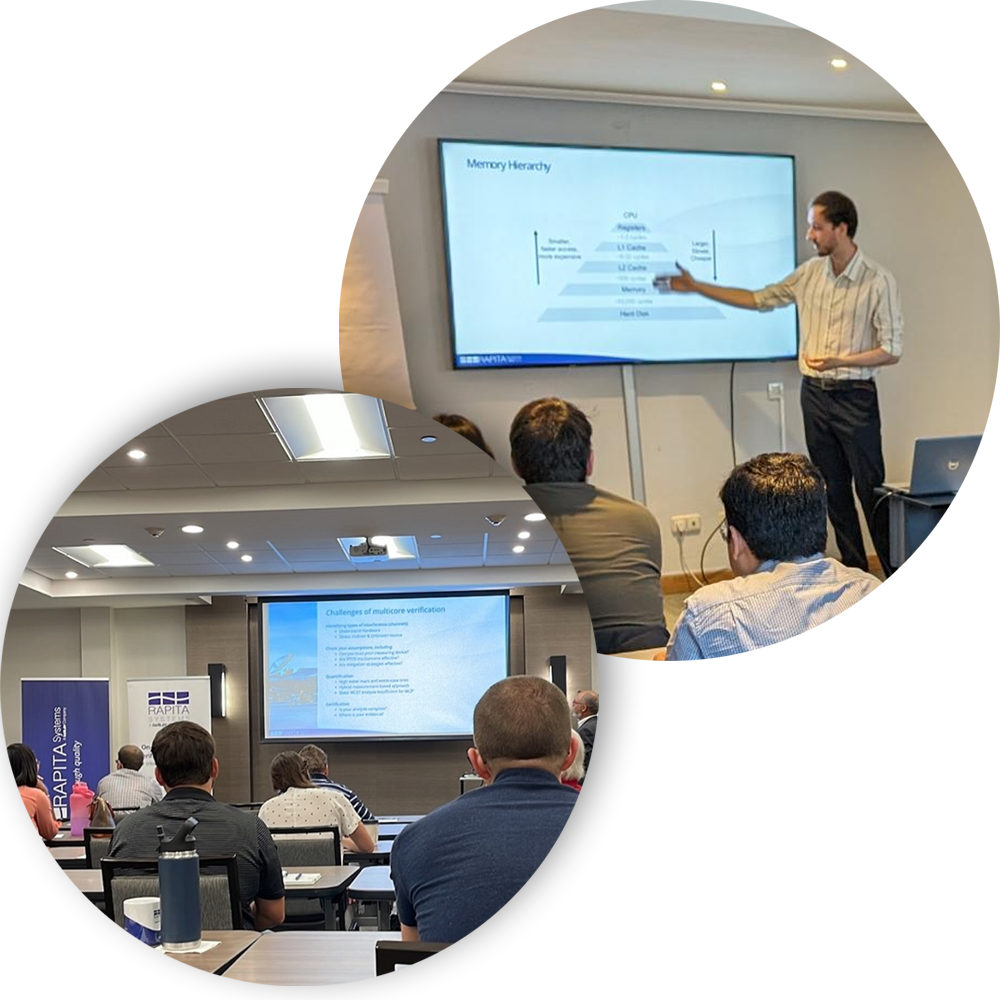
Want to learn more about multicore avionics certification?
DO-178C multicore training for all levels, led by certification experts, covering practical methods.