Skip to main content

 RapiTest - Functional testing
 RapiCover - Coverage analysis
 RapiTime - Timing analysis
 RapiTask - RTOS scheduling visualization
 RVS Qualification Kits - Tool qualification for DO-178C
 RapiCouplingPreview - DCCC analysis
 MACH178 Core Pack - Getting started
 MACH178 Platform Pack - Platform evaluation
 MACH178 Resource Pack - Interference verification
 MACH178 Qualification Pack- Tool qualification
 Tool Integration
 Training
 Consultancy
 Support
 RTBx - The ultimate data logging solution
 Sim68020 - Motorola 68020 Simulation
 RVS 3.25 brings improved zero-footprint analysis to more platforms
 Rapita Systems Collaborates with Wind River to Break the Multicore Certification Barrier
 Rapita Systems Launches Next Generation of MACH178 for Multicore
 RVS 3.24 accelerates multicore software verification
 Introduction to Data Coupling and Control Coupling for DO-178C
 The Evolution of DO-178 and ED-12 Standards
 Retro gaming with the Sim68020
 RVS gets a new timing analysis engine
 How to achieve multicore DO-178C certification with Rapita Systems
 How to achieve DO-178C certification with Rapita Systems
 Certifying Unmanned Aircraft Systems
 DO-278A Guidance: Introduction to RTCA DO-278 approval
 HISC 2026
 ISCLP 2026 (DGA)
 Multicore Software Verification and Certification Training (Langton Aerospace Technology)
 Supporting Multicore Interference Analysis using Branch Traces







The transformation of avionics in the late 1970s and early 1980s marked one of the most pivotal shifts in aviation history. As cockpits moved from analog gauges and mechanical linkages to increasingly sophisticated digital systems, a new challenge emerged: how do you ensure that the software now controlling critical flight functions is every bit as safe and reliable as the hardware it replaced?
Recognising the stakes, RTCA in the United States and EUROCAE in Europe joined forces to create the first comprehensive framework for certifying airborne software. Their parallel publications, DO-178 and ED-12, both released in 1982, laid the foundation for modern avionics safety and established software engineering as a certifiable discipline.
What followed was a decades long evolution shaped by rising software complexity, new development methods, and the aviation industry’s uncompromising commitment to safety.
In this blog, we explore how DO-178 and ED-12 have grown from their early origins into today’s framework. For simplicity, all subsequent references will use DO-178 to represent both DO-178 and ED-12 variants.

The Origins of DO-178 (1982)
The introduction of digital avionics created new opportunities, but also introduced significant risks:
- No consistent approach to software certification
- Potential for catastrophic failures due to software defects
- Limited regulatory guidance for approval processes
DO-178 was developed to address these issues by introducing a formal structure for software development, testing, and documentation.
Initial Impact
The first version of DO-178 established software as a certifiable engineering discipline, introducing foundational practices such as software verification, software validation, and structured documentation. It also required evidence to demonstrate software correctness, marking a significant shift toward more rigorous, process-driven development standards in safety-critical systems.
DO-178A (1985): Introducing Risk-Based Development
Early adoption of DO-178 revealed inconsistencies in interpretation and a lack of distinction between critical and non-critical systems. DO-178A addressed this by introducing the concept of software criticality levels.
This allowed organisations to:
- Apply stricter processes to safety-critical systems
- Reduce effort for lower-risk components
- Improve development efficiency
This shift helped align engineering effort with system risk, making certification more practical and scalable.
DO-178B (1992): Establishing the Industry Benchmark
By the early 1990s, rapid advances in software complexity exposed limitations in DO-178A. DO-178B was introduced as a comprehensive rewrite and quickly became the global standard for civil avionics software certification.
Key Enhancements
- Introduction of Software Levels (DAL A–E) to determine software criticality and certification requirements
- Move to an objective-based certification approach
- Strong emphasis on traceability and verification

The standard also formalized code coverage requirements, including:
- Statement coverage
- Decision coverage
- Modified Condition/Decision Coverage (MC/DC) for high-criticality systems
Impact on Industry
The new emphasis on end-to-end traceability and evidence-based verification increased development effort and cost for manufacturers. However, it also significantly improved safety and enabled the certification of advanced systems such as fly-by-wire controls and modern autopilot systems.
DO-178C (2011/2012): The Modern Standard
By the 2000s, software development had evolved to include model-based design, object-oriented programming, and automated toolchains. DO-178B did not provide clear guidance for these approaches, leading to ambiguity.
DO-178C was introduced in 2011 to modernize the framework and provide clarity for contemporary development methods.
Key Enhancements in DO-178C
- Improved clarity in requirements and verification
Clearer distinctions between requirement levels reduced ambiguity and strengthened lifecycle consistency. - Continued emphasis on rigorous code coverage
DO‑178C refined and clarified the rigorous code coverage expectations established in DO‑178B, reinforcing the application of MC/DC for high‑criticality systems. - Added support for modern development and verification approaches
Supplementary documents introduced additional guidance relating to specific development and verification approaches:- Tool qualification (DO-330)
- Model-based development (DO-331)
- Object-oriented programming (DO-332)
- Formal methods (DO-333)
- Focus on deterministic behavior
Reinforced timing predictability, including considerations such as Worst-Case Execution Time (WCET), which is critical for real-time systems. - Integration of advanced toolchains
Formally recognized the use of automated tools to ensure reliable outputs and more efficient certification processes.
Discover our DO-178C resources >
Impact on Modern Avionics Development
DO-178C remains the active DO-178 standard as of writing and has significantly strengthened avionics software development by:
- Enforcing rigorous verification and traceability
- Improving overall software quality and reliability
- Reducing the likelihood of defects in safety-critical systems
Although the changes it introduced increased the effort and cost of certification, they are essential for maintaining high safety standards in aviation.
From its origins in the 1980s to today’s DO-178C framework, the standard has continuously evolved to address increasing software complexity.
While no major revision beyond DO-178C is currently planned, additional guidance continues to emerge.
- EUROCAE’s AMC 20-193 (2022) and RTCA’s AC 20-193 (2024) provide guidance on the certification of hardware using multicore processors, and software hosted on multicore processors.
Updates like these ensure that DO-178 remains relevant as avionics technology continues to advance.
Discover our streamlined solution for multicore verification >
Conclusion
The evolution of DO-178 reflects the transformation of avionics software from relatively simple digital systems to highly complex, safety-critical architectures.
Each iteration has strengthened the industry’s ability to:
- Manage software risk effectively
- Ensure system reliability
- Maintain safety in increasingly complex environments
Today, DO-178C remains a cornerstone of avionics certification, enabling innovation while ensuring that safety remains uncompromised.
DO-178C webinars

White papers
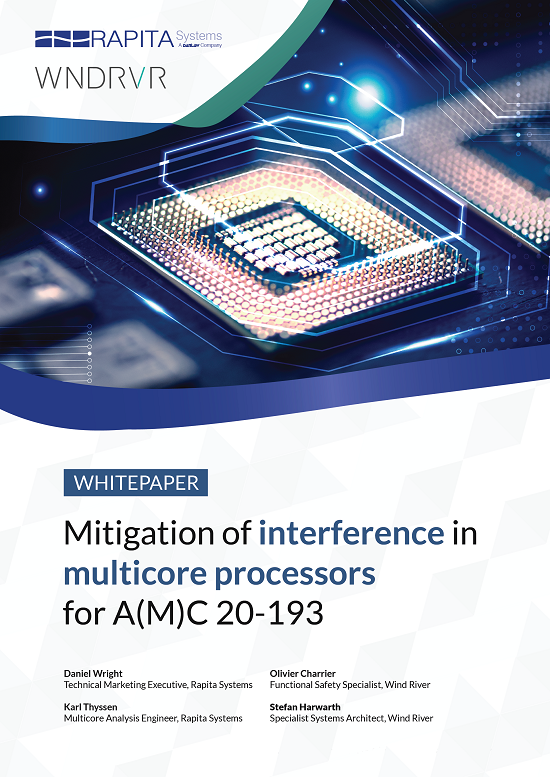
Mitigation of interference in multicore processors for A(M)C 20-193

Developing DO-178C and ED-12C-certifiable multicore software
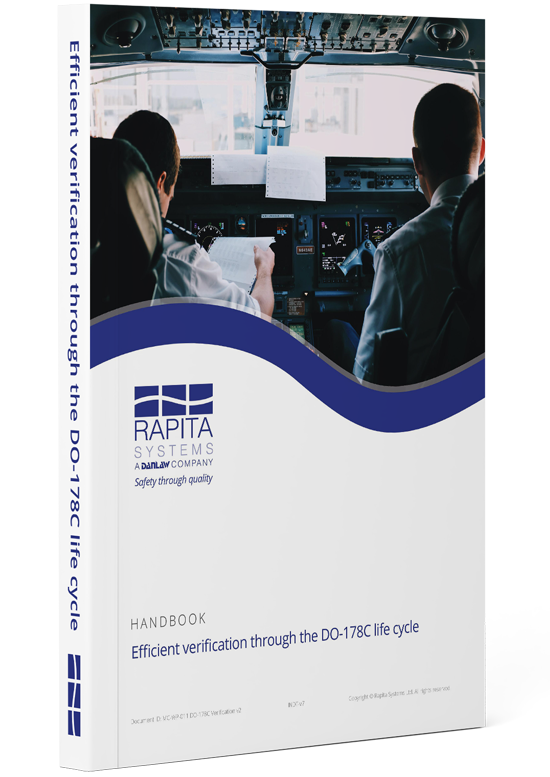
Efficient Verification Through the DO-178C Life Cycle
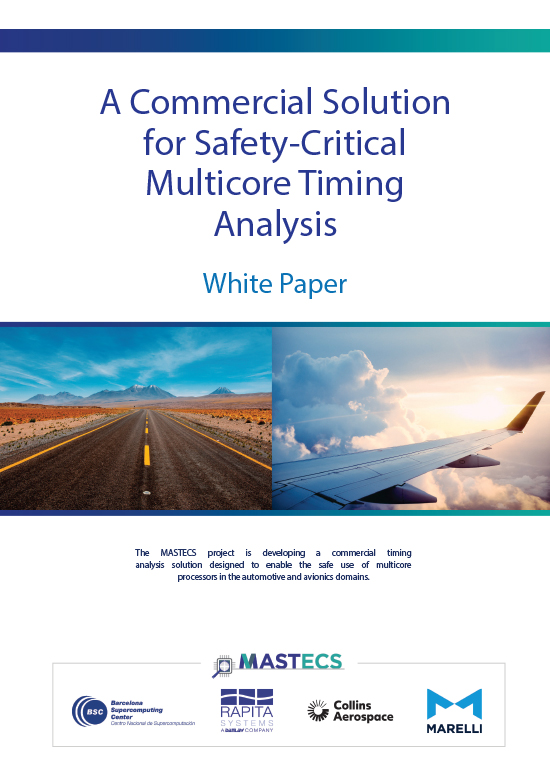
A Commercial Solution for Safety-Critical Multicore Timing Analysis