Skip to main content

 RapiTest - Functional testing
 RapiCover - Coverage analysis
 RapiTime - Timing analysis
 RapiTask - RTOS scheduling visualization
 RVS Qualification Kits - Tool qualification for DO-178C
 RapiCouplingPreview - DCCC analysis
 MACH178 Core Pack - Getting started
 MACH178 Platform Pack - Platform evaluation
 MACH178 Resource Pack - Interference verification
 MACH178 Qualification Pack- Tool qualification
 Tool Integration
 Training
 Consultancy
 Support
 RTBx - The ultimate data logging solution
 Sim68020 - Motorola 68020 Simulation
 Women in Tech Week - Elaine Batchelor on why soft skills matter and building quality teams from scratch
 Women in Tech Week - Zoë Stephenson on on 25 years in tech, high-integrity software and making quality happen
 Women in Tech Week - Hannah Jolly on making RVS easy and why representation matters
 Women in Tech Week - Lily Gaunt on Roblox, real-world code and building cool things
 Introduction to Data Coupling and Control Coupling for DO-178C
 The Evolution of DO-178 and ED-12 Standards
 Retro gaming with the Sim68020
 RVS gets a new timing analysis engine
 How to achieve multicore DO-178C certification with Rapita Systems
 How to achieve DO-178C certification with Rapita Systems
 Certifying Unmanned Aircraft Systems
 DO-278A Guidance: Introduction to RTCA DO-278 approval
 Multicore Software Verification and Certification Training (Langton Aerospace Technology)
 Supporting Multicore Interference Analysis using Branch Traces







This macro (see below) toggles (0 becomes 1, 1 becomes 0) one of eight output pins of the Infineon TriCore 1797 port P9 by writing the appropriate value to the register P9_OMR. It uses an assembly string composed from string literals in the macro body and its "stringized" argument, #Pin, which is a value in the range 0..7. The final part of the inline assembly construct is the "clobber list", the list of registers changed (and not restored) by the assembly code. This macro is automatically inserted into PCP code by the RapiTime code instrumenter in order to monitor the different paths and times taken by software executing a number of tests (see RapiTime instrumentation).
#define RPT_TogglePin(Pin) __asm(               \
    "ldl.il r0,(1 << (" #Pin "))     \n\t"      \
    "ldl.iu r0,(1 << (" #Pin "))     \n\t"      \
    "ldl.iu r1,@HI(P9_OMR)           \n\t"      \
    "ldl.il r1,@LO(P9_OMR)           \n\t"      \
    "st.f  r0,[r1],size=32"                     \
    :::"r1","r0","r7")
It is not obvious that r7 is corrupted by the listed instructions. When we omitted r7 from the clobber list, the TASKING compiler generated code that, very efficiently, cached the result of a test in the Z flag, assuming that this flag was preserved by our RPT_TogglePin macro. However r7 contains the PRAM data pointer (DPTR) and the status flags, including the N and Z flags that are changed by the ldl instruction. When the compiled code read the corrupted Z flag immediately after the assembly code for RPT_TogglePin, the program failed, triggering an expensive debugging process. The fix was simply to add r7 to the clobber list, informing the compiler that r7 is not preserved by the inline assembly string and ensuring that it saves and restores the Z flag itself.
You have to include r7 in the clobber list for inline assembly unless you have checked each instruction to be sure that it affects neither DPTR nor the status flags.
DO-178C webinars

White papers
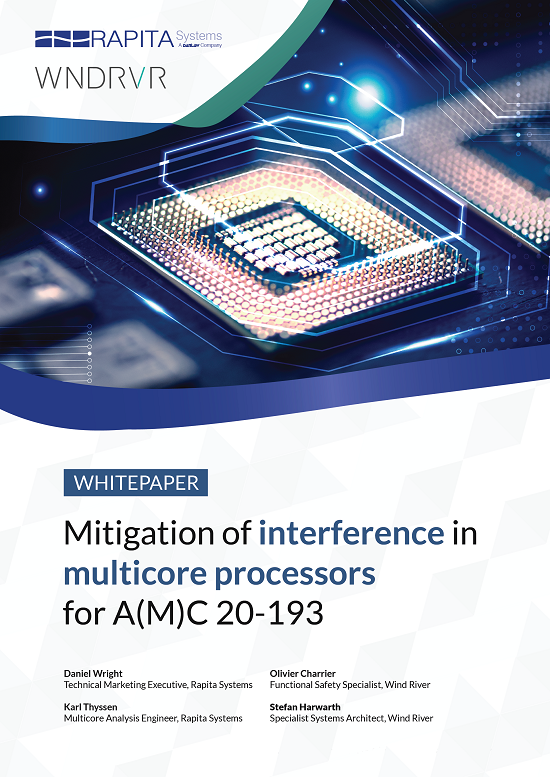
Mitigation of interference in multicore processors for A(M)C 20-193

Developing DO-178C and ED-12C-certifiable multicore software

Efficient Verification Through the DO-178C Life Cycle

A Commercial Solution for Safety-Critical Multicore Timing Analysis