Skip to main content

 RapiTest - Functional testing
 RapiCover - Coverage analysis
 RapiTime - Timing analysis
 RapiTask - RTOS scheduling visualization
 RVS Qualification Kits - Tool qualification for DO-178C
 RapiCouplingPreview - DCCC analysis
 MACH178 Core Pack - Getting started
 MACH178 Platform Pack - Platform evaluation
 MACH178 Resource Pack - Interference verification
 MACH178 Qualification Pack- Tool qualification
 Tool Integration
 Training
 Consultancy
 Support
 RTBx - The ultimate data logging solution
 Sim68020 - Motorola 68020 Simulation
 RVS 3.25 brings improved zero-footprint analysis to more platforms
 Rapita Systems Collaborates with Wind River to Break the Multicore Certification Barrier
 Rapita Systems Launches Next Generation of MACH178 for Multicore
 RVS 3.24 accelerates multicore software verification
 Introduction to Data Coupling and Control Coupling for DO-178C
 The Evolution of DO-178 and ED-12 Standards
 Retro gaming with the Sim68020
 RVS gets a new timing analysis engine
 How to achieve multicore DO-178C certification with Rapita Systems
 How to achieve DO-178C certification with Rapita Systems
 Certifying Unmanned Aircraft Systems
 DO-278A Guidance: Introduction to RTCA DO-278 approval
 DO-178C Multicore Virtual Training
 HISC 2026
 ISCLP 2026 (DGA)
 Multicore Software Verification and Certification Training (Langton Aerospace Technology)







Product Page
Product logo

How do I set up an MPC5xx IO port to collect data?

At Rapita, our main interest in writing to output ports of microcontrollers is to provide an efficient means of measuring code execution times or code coverage (via our RapiTime or RapiCover tools – both part of RVS). Typically, we’d have some way of logging the values written to the output port, for example the RTBx or a logic analyzer. How do you set up an MPC5xx IO port to collect data?
What's new in RVS 3.1?
It's been over a year since the release of RVS 3.0 and the introduction of RapiCover, our tool for on-target code coverage. The good news is our development team has been busy since September 2011 - and today we are proud to launch RVS 3.1. So what can you look forward to from this release? Here is an outline of the top 5 new features and improvements.
Is Windows Safe Mode faster for code?
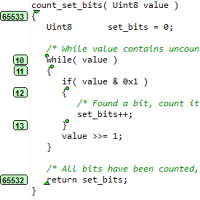
In a conversation with a colleague, I found myself wondering what was the impact of running code under Windows vs a "bare metal" x86 box. One of the nice things about working for a tool vendor is that you have the tools to hand to perform these kind of experiments "for fun".
Supporting Duff's Device in RVS
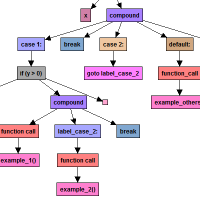
Nested “case” labels are an obscure feature of C, and not often seen. However, examples do exist, typically hidden deep in standard library functions and our customers come across them from time to time. Here's a little article about how we recently brought support for them into RVS.
Integrating RVS with Jenkins

Find out about our support for continuous RVS reporting through Jenkins.
Out of the box RVS integration for DDC-I's Deos RTOS

Our RVS integration with the Deos RTOS promises to offer an out-of-the-box solution, significantly reducing the effort needed to analyze timing and scheduling behavior of software hosted on Deos.