Skip to main content

 RapiTest - Functional testing for critical software
 RapiCover - Low-overhead coverage analysis for critical software
 RapiTime - In-depth execution time analysis for critical software
 RapiTask - RTOS scheduling visualization
 RVS Qualification Kits - Tool qualification for DO-178 B/C and ISO 26262 projects
 RapiCouplingPreview - DCCC analysis
 MACH178 - Multicore Avionics Certification for High-integrity DO-178C projects
 MACH178 Foundations - Lay the groundwork for A(M)C 20-193 compliance
 RapiDaemons - Analyze interference in multicore systems
 RTBx - The ultimate data logging solution
 Sim68020 - Simulation for the Motorola 68020 microprocessor
 Data Coupling & Control Coupling
 Training
 Consultancy
 Tool Integration
 Support
 RVS 3.24 accelerates multicore software verification
 Rapita Systems and Avionyx Announce Strategic Partnership to Offer Best-in-class Avionics Solutions
 RVS 3.23 Launched
 Rapita System Announces New Distribution Partnership with COONTEC
 Retro gaming with the Sim68020
 RVS gets a new timing analysis engine
 How to measure stack usage through stack painting with RapiTest
 What does AMACC Rev B mean for multicore certification?
 How to achieve multicore DO-178C certification with Rapita Systems
 How to achieve DO-178C certification with Rapita Systems
 Certifying Unmanned Aircraft Systems
 DO-278A Guidance: Introduction to RTCA DO-278 approval
 Test what you fly - Real code, Real Conditions Webinar
 Avionics Certification Q&A: CERT TALK
 XPONENTIAL 2026
 DO-178C Multicore In-person Training (Heathrow)





Please find your custom set of resources below.
Getting started with RVS

Accelerated software verification with RVS 3.23

Learn how RVS 3.23 helps you kick start your software verification for DO-178C and other high criticality projects.
Rapita Systems - Safety Through Quality
Rapita Systems group provides on-target software verification tools and services globally to the embedded aerospace and automotive electronics industries. Its solutions, including requirements-based functional testing, structural code coverage analysis and worst-case execution time analysis, help to increase software quality and deliver evidence to meet safety and certification objectives and reduce costs for DO-178C and ISO 26262 projects. The group provides the world’s leading commercial solution for timing analysis to support the certification of multicore systems, including systems developed to meet AC 20-193, AMC 20-193 and AA-22-01 standards.
Multicore Avionics Certification for High-integrity DO-178C projects
MACH178 provides an end-to-end solution for providing certification evidence to satisfy multicore DO-178C airworthiness objectives, including AC 20-193, AMC 20-193 and CAST-32A.
Streamlined AMC 20-193 compliance with MACH178 Foundations

MACH178 Foundations includes an off-the-shelf set of template plans, procedures and checklists to help DO-178C software developers meet multicore airworthiness objectives, including AC 20-193 and AMC 20-193.
On-target software verification with RVS
Discover how to run requirement based tests, produce coverage evidence and perform timing analysis for your applications on-target.
Functional testing with RapiTest
RapiTest – Functional testing for critical software.
Structural coverage analysis with RapiCover
RapiCover – Low-overhead coverage analysis for critical software.
Execution time analysis with RapiTime
RapiTime – In-depth execution time analysis for critical software.
System event tracing with RapiTask
RapiTask – RTOS scheduling visualization for critical software.
Zero footprint coverage analysis with RapiCover Zero
RapiCoverZero – Zero-footprint structural coverage analysis for critical software.
Zero footprint timing analysis with RapiTime Zero
RapiTimeZero – Zero-footprint in-depth execution time analysis for critical software.
Zero-footprint system event tracing with RapiTask Zero
RapiTaskZero – Zero-footprint RTOS scheduling visualization for critical software.
Software verification of the Solar Orbiter's EPD
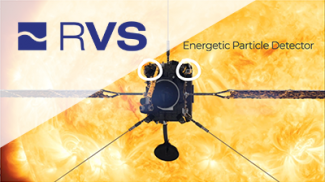
The University of Alcala, who led the development of the EPD system, have used the Rapita Verification Suite to power their coverage and timing analysis testing.
How to make AI safe in autonomous systems with SAIF

SAIF Systems are enabling the safe use of AI in real-time autonomous systems such as uncrewed and unmanned avionics systems (UAS). We're excited to be working with SAIF, whose DO-178C software verification is powered by Rapita Systems' RVS suite.
Tool automation in multicore timing analysis
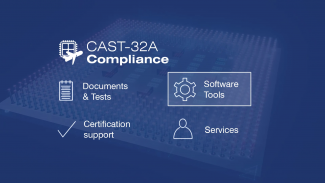
Tool automation supports the MACH178 solution, reducing the effort needed to run, collect results from and analyze tests of multicore timing behavior, and produce evidence for AC 20-193, AMC 20-193 and CAST-32A.
Analyzing results from multicore timing analysis
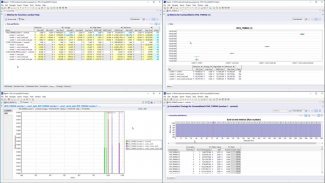
Learn how RapiTime supports the analysis of results from multicore timing analysis through a range of charts and visualization tools.
Custom multicore exports with RVS
RVS lets you generate custom exports for multicore timing analysis projects. By supporting automatic generation of results, these reduce compliance effort, letting your engineers focus on testing and analysis rather than documentation.
Continuous verification with RVS and Bamboo
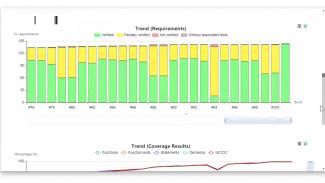
Learn how RVS helps you track the progress of your software verification through continuous builds with Bamboo.
Continuous verification with RVS and Jenkins
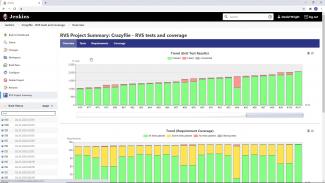
Learn how RVS helps you track the progress of your software verification through continuous builds with Jenkins.
Viewing software behavior at a glance with RVS treemaps
Learn how RVS treemaps help you get an overview of verification progress and other metrics across your code base and help you easily understand your code hierarchy and structure at a glance.
Analyze code complexity with RVS
RVS collects and displays complexity metrics for analyzed code, allowing you to identify overly complex code for refactoring.
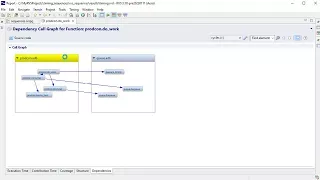
Visualize call dependencies with RVS
Sequence analysis with RapiTime

RapiTime lets you collect timing measurements between any points in your code, allowing you to calculate metrics such as response times, separation and periodicity.
Optimizing tests to run after code changes with RVS
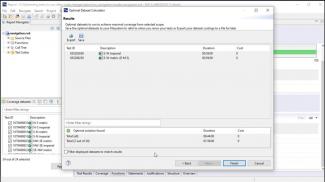
Learn how RVS reduces the effort needed to rerun tests after code changes by identifying the optimal set of tests to rerun to assess the impact of the change.
Easily configurable analysis with RVS
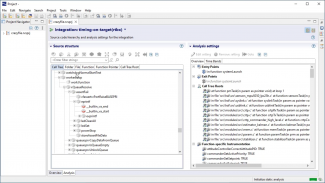
Learn how RVS makes it easy to configure your analysis and instrumentation settings.
Out-of-the-box software verification with Deos® and RVS
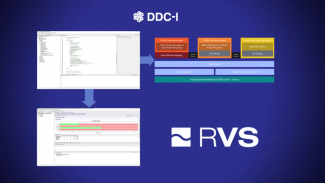
Learn how easy it is to verify projects running on the Deos operating system with RVS due to an out-of-the-box integration.
Complementary DO-178C verification with Ansys(R) SCADE Test(TM) and RVS
Learn how RVS can complement the verification activities supported by ANSYS® SCADE® Test™, enabling on-target testing of model code and handwritten code.
Requirements traceability with RapiTest
Learn how RapiTest helps you trace between your requirements-based tests and the requirements from which they were developed and track your requirements coverage.
Requirements traceability with RapiTest and Polarion ALM

RapiTest integrates with Polarion® to help you maintain traceability between requirements and test cases throughout your project's life cycle.
Learn more here.
Easily manage test runs with RapiTest
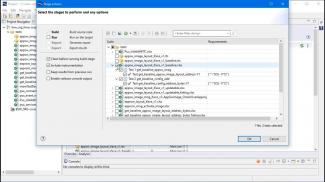
Learn how RapiTest makes it easy to select the tests you want to run with quick selection and filtering options.
Generating test templates with RapiTest
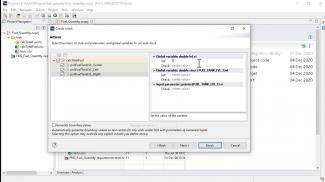
Learn how RapiTest's template generator helps you to generate test templates quickly.
Testing using the RapiTest Editor
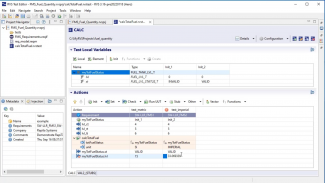
Learn how the RapiTest Editor makes it easy to write RapiTest tests by providing an intuitive test authoring interface with context-sensitive assistance.
Using support functions with RapiTest
Learn how RapiTest support functions can help you increase testing efficiency by reusing test logic across multiple tests.
Testing using spreadsheets in RapiTest
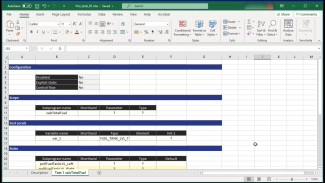
Learn how the RapiTest Spreadsheet Format makes it easy to write tests, allowing testers to focus on testing not coding.
Justifying untestable code with RapiCover
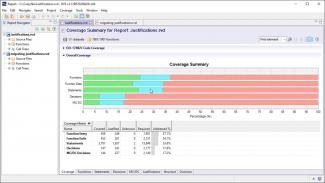
Learn how RapiCover and RapiCoverZero justifications let you mark untestable code as covered by analysis.
Merging coverage from multiple tests with RapiCover
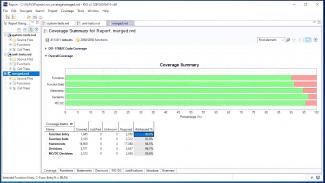
Learn how RapiCover helps you automatically merge coverage from multiple tests.
Merging coverage from different builds with RapiCover
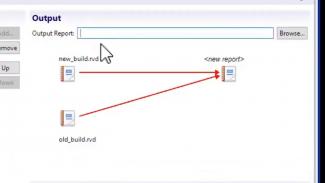
Learn how RapiCover helps you automatically merge coverage from different builds.
Using time bands to apply instrumentation with RapiTime
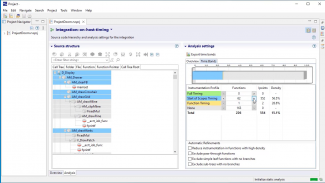
Learn how RapiTime's Time Bands feature helps you automatically apply timing instrumentation based on the expected call frequencies of your code.
Merging timing results with RapiTime
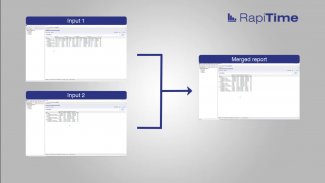
RapiTime lets you merge timing results from multiple test runs, allowing you to collect data in parallel from multiple platforms or at different time points and collate your results.
Tool qualification with RVS
Learn how RVS tool qualification solutions make it easy to qualify the use of RVS in DO-178C and ISO 26262 projects.
Simulation for the Motorola 68020 microprocessor with Sim68020
Clear qualification guidance with RVS qualification kits
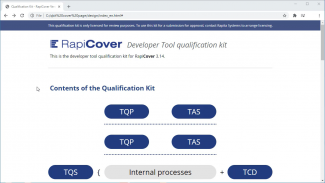
Learn how RVS qualification kits help make the tool qualification process efficient by answering many of the questions commonly asked throughout it.
Kickstart your verification with RVS tutorials
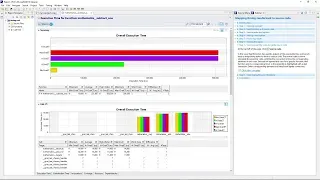
Learn how RVS tutorials can help you kickstart your verification projects and learn how to use RVS efficiently.
Multicore Timing Analysis Demo
Darknet YOLOv3 Object Detection
Enabling cost-effective modular avionics with FACE
Major defense suppliers like Bell have embraced the Modular Open System Approach to enable quick, cost-effective new technology integration. This video explains how Rapita works with customers like Bell and other ecosystem suppliers like DDC-I and Wind River to facilitate compliance with the Future Airborne Capability Environment (FACE) standard.
Ask the expert: Multicore safety
Lynx Software Technologies discusses the state of multicore safety with Rapita experts.
Challenges of certifying multicore avionics in line with A(M)C 20-193 objectives - ATW Europe 2023

Multicore systems are being used more in critical avionics systems due to their improved SWaP characteristics, increasing need for performance, and decreasing availability of single core processors. The use of these systems presents certification challenges due to the impact of interference from software running on different cores reducing the predictability of timing behavior of hosted applications.
In this presentation we outline future challenges of A(M)C 20-193 certification and present a robust, efficient approach to meeting A(M)C 20-193 objectives, which is being adopted by aerospace avionics developers across the globe.
Timing Analysis for Critical Aerospace Embedded Software - ATW Global 2021

With the increasing use of multicore processors in the critical embedded aerospace industry, understanding how to perform timing analysis of these systems in line with AC 20-193, AMC 20-193 and CAST-32A is crucial.
In this presentation from Aerospace Tech Week Global 2021, you'll learn about some of the challenges of multicore timing analysis and how best to approach DO-178C certification for multicore software.
Verifying Multicore Systems supporting the FACE standard - ATW Global 2021

The Future Airborne Capability Environment (FACE™) consortium have developed an open architecture technical standard as well as business models for implementing FACE standards. In this presentation recorded at Aeropsace Tech Week Global in 2021, you'll learn about the challenges of verifying multicore systems that use the FACE standard.
MASTECS Project

The MASTECS project aims to innovate and commercialize exploitable technology for multicore timing analysis.
Using support functions with RapiTest
Learn how RapiTest support functions can help you increase testing efficiency by reusing test logic across multiple tests.
Multicore software verification with RVS 3.22
Learn how RVS 3.22 supports efficient verification of multicore software for DO-178C, AC 20-193 and AMC 20-193.
Streamlined software verification with RVS 3.21
RVS 3.21 streamlines software verification for safety-critical software.
Learn more at www.rapitasystems.com/products/rvs-321.
Launching critical software to success with RVS 3.20
RVS 3.20 streamlines software verification for mission and safety-critical software, and introduces a new, optimized approach for verification of space software. Learn more here.
Streamlined software verification with RVS 3.19
Learn how RVS 3.19 streamlines software verification, making it more efficient than ever to create functional tests with test logic reusable across tests, bringing improved support for testing C++ code, and allowing merging of timing results from RapiTimeZero.
Streamlined software verification with RVS 3.18
Learn how RVS 3.18 streamlines software verification, making it easier than ever to understand your project's structure, collect detailed timing measurements during test execution, and export results.
Accelerated verification with RVS 3.17
Learn how RVS 3.17 accelerates software verification, making it faster than ever to run verification projects through improved test authoring, easier merging of timing results, and integrations with third-party tools.
Revolutionized testing with RVS 3.16
Learn how RVS 3.16 revolutionizes software testing, bringing an all new intuitive GUI-based test editor for RapiTest, improved visualization tools for viewing results from multicore timing analysis, and more.
Multicore timing analysis support with RVS 3.15
Learn how RVS 3.15 makes software verification more efficient, bringing new features to support multicore timing analysis and a preview version of a new way to write tests for RapiTest directly within the RVS Project Manager.
Streamlined software verification with RVS 3.14
Learn how RVS 3.14 makes software verification more efficient, including new features and enhancements for RapiTest, the ability to collect and analyze multicore performance metrics, and expanded qualification kits.
CAST-32A Compliance Solution Product brief bundle

Our CAST-32A Compliance Solution provides a complete solution for certifying multicore aerospace projects in accordance with CAST-32A guidance.
Custom packages support different roles in the avionics supply chain, including those of Integrated Modular Avionics (IMA) System Integrators,
Platform Suppliers and Application Suppliers.
AI-driven Requirements Traceability for Faster Testing and Certification

In this insightful webinar, "Streamlining Traceability: Automating the Path from Requirements to Tests", we will dive into the latest advancements in requirements traceability and test automation. Discover how to enhance your development process by seamlessly linking requirements to tests, reducing errors, and improving compliance in safety-critical industries.
Deep Dive on Multicore Interference

In this webinar, multicore experts from Rapita Systems discuss the concept of multicore interference and its significance for the development and certification of multicore avionics.
A(M)C 20-193 vs. CAST-32A: What the change means for your DO-178C Multicore project

Find out what the new AMC 20-193 guidance for certification of multicore DO-178C/ED-12C projects means for your multicore avionics project
Test what you fly - Real code, Real Conditions Webinar

The ability to collect complete trace data from safety-critical avionics software on intended final hardware is crucial, enabling verification of software behavior on-target to meet DO-178C objectives. In this technical webinar, Lauterbach and Rapita Systems explore how TRACE32 and RVS can be used to support requirements-based testing, code coverage analysis and timing analysis including WCET for DO-178C projects. Join us to see how trace data can be collected during on-target PIL and HIL testing and used to produce test, coverage and timing evidence efficiently using a workflow qualified for DO-178C.
Mitigation of Interference in Multicore Processors

In this webinar, Rapita Systems and Wind River discussed the multicore certification landscape, the challenges of multicore interference and how to mitigate interference.
Certification-Ready Rust: GNAT Pro & RVS for Avionics Standards

As the aerospace industry evolves, so too must the tools and languages we use to build its most critical systems. Rust is emerging as a powerful, memory-safe alternative to C/C++, but how can it be used in environments governed by rigorous standards like DO-178C? In this exclusive webinar, AdaCore and Rapita Systems will demonstrate how their tools GNAT Pro for Rust and the Rapita Verification Suite (RVS) can enable the safe, certifiable use of Rust in avionics software.
Unlocking DO-178C Compliance Webinar

DO-178C objective 6.4.4.c includes a required activity to verify additional code introduced by the compiler for DAL A projects i.e. code, that cannot be traced to Source Code, to demonstrate the correctness of such additional code sequences. Often called a “hidden” activity of DO-178C, its placement within the 6.4.4.c objective can lead to confusion. At first glance, objective 6.4.4.c is about test coverage of software structure rather than verification, yet activity 6.4.4.2.b clearly requires demonstrating that the correctness of the object code has been verified. Demonstrating coverage and correctness are very different things.
A(M)C 20-193 vs AA-22-01

This webinar discusses how the USAF AA-22-01 guidance compares with A(M)C 20-193 guidance, the gold standard for multicore airworthiness certification.
Integrating & verifying time-critical applications on multicore platforms

This webinar shows how addressing A(M)C 20-193 objectives can be simplified using the MACH178 solution and the ASTERIOS toolsuite.
Efficient DO-178C verification - Functional testing

In the first of our series of three DO-178C webinars, we explore Requirements-based functional testing, which is a key aspect of complying with DO-178C guidance.
Efficient DO-178C verification - Code coverage

In the second in our series of three DO-178C webinars, we examine Code coverage analysis, which is a key verification activity in DO-178C software development projects.
Efficient DO-178C verification - WCET analysis

In the third and final installment of our DO-178C webinar series we will explore software Worst-case execution time (WCET); an important verification activity for DO-178C projects.
Verifying multicore hardware and software

Learn how ecosystem collaborations enable certification of multicore software in this joint webinar from Rapita Systems, NXP and Curtiss-Wright.
Verifying your Multicore RTOS

Learn how to optimize RTOS configuration to prevent multicore interference and verify the effectiveness of resource partitioning using Rapita’s unique timing/interference analysis methodology to build a robust certification case.
Supplementing DO-178C activities for CAST-32A

Multicore certification expert Dr. Christos Evripidou, outlines new certification activities and resources that can be flexibly integrated into your existing DO-178C workflow to satisfy the full scope of multicore certification objectives.
Efficient testing with RVS and ANSYS® SCADE® Test™

Learn how Rapita helps you perform back-to-back testing of your SCADE models by integrating with ANSYS® SCADE® Test™.
Incremental Assurance of Multicore Integrated Modular Avionics (IMA)

In this webinar, you'll learn about Incremental Assurance of Multicore Integrated Modular Avionics.
Certifying multicore systems for DO-178C (CAST-32A) projects

In this webinar, you'll learn an approach to certifying multicore systems for DO-178C (CAST-32A) projects.
Solving DAL-A Safety Certification Challenges for Military Avionics Systems

This webcast featuring industry experts will cover various approaches and solutions for certifying these solutions to conforming to Design Assurance Level (DAL) A in military helicopters, fighter jets, VTOL platforms, and unmanned aircraft systems.
Airborne Safety with FACE™ in the Digital Battlespace

Avionics experts discuss how FACE conformance can help ensure system safety during the digital transformation journey in avionics.
Out of the box Solution for Multicore Analysis

Learn how Rapita and DDC-I technologies can provide an end-to-end solution for addressing CAST-32A objectives.
Verifying Multicore RTOS Partitioning for DO-178C (CAST-32A) Projects

Combining RTOS partitioning, intelligent system design and expert independent verification is the most effective/reliable pathway to DO-178C multicore certification.
Multicore Timing for DO-178 Projects

World-leading experts on avionics certification from Rapita Systems and ConsuNova discuss multicore timing analysis for DO-178 projects.
Multicore for ISO 26262 - Demonstrating freedom from interference webinar

In this webinar, you'll learn from world-leading experts on multicore timing analysis and automotive certification.
Flyer
Reduce your automotive V&V effort with Rapita Systems

Rapita's verification solutions reduce verification costs and time to market for automotive software.
Software verification for space projects

Compliance with NASA-STD-8739.8B and ECSS‑E‑ST‑40C ensures that space‑mission software is engineered to the highest standards of safety, reliability, and quality. By following these rigorous guidelines, teams can demonstrate that mission‑critical onboard software behaves predictably and performs safely under all operating conditions, providing the assurance needed to certify the most critical spacecraft systems.
Using RVS to support multicore timing analysis

Find out how the Rapita Verification Suite (RVS) assists you with A(M)C 20-193 compliance.
Verifying model-based software for DO-178C with RVS

Learn how RVS supports on-target testing effort for Simulink and SCADE projects
Multicore timing solutions for automotive

Rapita's multicore timing solutions support the selection and configuration of multicore platforms and verification of multicore software used in automotive projects.
Visitor Information for Rapita Systems (York)

Quick guide containing everything you need to know before visiting Rapita Systems in York.
Rapita Customer Testimonials

Rapita has worked with some of the world's largest aerospace OEMs. Here is what some of our customers have to say about working with Rapita.
Why choose Rapita?

Rapita’s tools and services are designed to reduce the effort needed to verify safety-critical code.
Order Information sheet
MACH178 Foundations Order Information

MACH178 Foundations: Product description, licensing and purchasing options
RVS Aero Order Information

RVS Aero: Product description, licensing and purchasing options
RVS Auto Order Information

RVSAuto: Product description, licensing and purchasing options
RVS Space Order Information

RVSSpace: Product description, licensing and purchasing options
RVS Acad Order Information

RVSAcad: Product description, licensing and purchasing options
Platform Support Packages Order information

Platform Support Packages support the analysis of code by zero-footprint RVS tools.
RapiDaemon DO-178C Tool Qualification Order Information

Our Qualification Kits, along with our RapiDaemon Qualification Service, provide the resources and expertise you need to qualify RapiDaemons for use in DO-178C projects.
RVS Tool Qualification for DO-178C Order Information

Our Qualification Kits, along with our expert Qualified Target Integration Service, provide the resources and expertise you need to qualify RVS for use in DO-178C projects.
RTBx Order Information

RTBx data logger: product description, purchasing options and warranty
Engineering Services Order Information

Engineering services Order Information Sheet
Glossary
DO-178C Glossary

Glossary of terms commonly used in the DO-178 domain. form { margin-left: 40px; } .dw-img img { height: auto; box-shadow: none !important; border: none !important; } .dlimg { margin: 0px !important; border: none !important; box-shadow: none !important; }
Brochure
Rapita Systems Brochure

Rapita Systems provide a range of solutions to support critical software verification, including automated tooling and expert consultancy services including software verification and validation, multicore airworthiness (AC 20-193, AMC 20-193, CAST-32A and AA-22-01) compliance, and multicore timing analysis services. In this brochure, find out what we offer to help you reduce your verification cost and effort.
MACH178

We provide a unique solution to support AC 20-193, AMC 20-193 and CAST-32A compliance for multicore aerospace systems. This provides a path to DO-178C multicore certification to achieve AC 20-193 and AMC 20-193, reducing migration risks and opening up the performance benefits of using multicore processors. Learn how MACH178 can help you produce DO-178C, AC 20-193 and AMC 20-193 evidence for multicore systems.
Rapita Verification Suite (RVS) Training Brochure

Our RVS training courses teach verification concepts and how to use RVS plugins to perform verification activities efficiently. Learn how our training courses support efficient verification using RVS.
Product brief
Lay the groundwork for A(M)C 20-193 compliance with MACH178 Foundations

MACH178 Foundations provides a a collection of plans, procedures, checklists and other resources to support achieving multicore DO-178C A(M)C 20-193 airworthiness objectives using the MACH178 workflow. Learn how MACH178 Foundations can lay the foundations for your multicore DO…
Supporting your A(M)C 20-193 compliance with MACH178 Services

MACH178 Services support achieving multicore DO-178C A(M)C 20-193 airworthiness objectives using the MACH178 workflow. Learn how MACH178 Services can support you on your multicore DO-178C (A(M)C 20-193) certification journey.
Functional testing for critical software with RapiTest

Functional testing such as requirements-based testing ensures that software behaves as expected and is a crucial part of software verification in contexts such as aerospace DO-178C and automotive ISO 26262 development. Learn how RapiTest integrates into existing development environments to perform unit, integration and system testing of embedded software.
On-target structural code coverage analysis with RapiCover

Code coverage analysis provides evidence as to how much of a software application has been tested and is needed to satisfy aerospace DO-178C and automotive ISO 26262 certification. Learn how RapiCover can help to reduce testing effort when conducting code coverage analysis.
Measurement-based timing and WCET analysis with RapiTime

Software execution time analysis provides evidence as to the timing behavior of a software application and is needed to satisfy aerospace DO-178C and automotive ISO 26262 certification at the highest criticality levels. Learn how RapiTime performs detailed timing and worst-case execution time analysis with minimal overheads.
Visualising RTOS Scheduling and Event Tracing with RapiTask

Understanding the task-level scheduling behavior of an application allows troubleshooting of systems, including fixing rare timing events and capacity issues. Find out how RapiTask can help you to understand software scheduling behavior and diagnose scheduling issues.
Interference channel analysis support for multicore airworthiness certification with RapiDaemons

With the increasing use of multicore systems in safety-critical avionics, the need multicore timing analysis is becoming increasingly more important. Learn how RapiDaemons create interference on shared resources in multicore systems, supporting multicore timing analysis.
RapiDaemon Tool Qualification for DO-178C

Tool qualification provides evidence that software tools used to eliminate, reduce or automate design assurance processes are robust. Within the aerospace DO-178C, RapiDaemons are defined as Criteria 3 tools with Tool Qualification Level 5, and can be used in projects of every design assurance level, including DAL A. Learn how we provide tool qualification support for using RapiDaemons in projects requiring DO-178C certification.
Zero-footprint coverage analysis with RapiCover Zero

Code coverage analysis provides evidence as to how much of a software application has been tested. While it is necessary to perform this analysis on critical aerospace and automotive software, this can be challenging when no access is available to source code, making it impossible to instrument this code to analyze coverage during tests. Learn how RapiCoverZero solves this challenge by collecting structural coverage metrics from software execution without…
Zero-footprint execution time analysis with RapiTime Zero

Software execution time analysis provides evidence as to the timing behavior of a software application. While it is necessary to perform this analysis on critical aerospace and automotive software, this can be challenging when no access is available to source code, making it impossible to instrument this code to analyze software execution time during tests. Learn how RapiTimeZero solves this challenge by calculating the execution time of software without…
Zero-footprint RTOS event tracing with RapiTask Zero

Understanding the task-level scheduling behavior of an application allows troubleshooting of systems, including fixing rare timing events and capacity issues. When no access is available to software source code, it can be challenging to understand the task-level scheduling behavior of critical aerospace and automotive software, as it is not possible to instrument this code to analyze the application. Learn how RapiTaskZero solves this challenge by…
RVS Tool Qualification for DO-178C

Tool qualification provides evidence that software tools used to eliminate, reduce or automate design assurance processes are robust. Within the aerospace DO-178C, RVS is defined as a Criteria 3 tool with Tool Qualification Level 5, and can be used in projects of every design assurance level, including DAL A. Learn how we provide tool qualification support for using RVS in projects requiring DO-178B/C certification.
RVS Tool Qualification for DO-278A

Tool qualification provides evidence that software tools used to eliminate, reduce or automate design assurance processes are robust. Within the aerospace DO-278A, RVS is defined as a Criteria 3 tool with Tool Qualification Level 5, and can be used in projects of every design assurance level, including DAL A. Learn how we provide tool qualification support for using RVS in projects requiring DO-278A certification.
Continuous tracing with the RTBx data logger

The RTBx data logger is a cost-effective and easy-to-use approach to collecting timing and coverage data from output ports on target hardware for verification using RVS tools. In this product brief, learn the key benefits and specifications of the RTBx.
Simulation of the Motorola 68020 microprocessor with Sim68020

It’s becoming harder, and more expensive, to replace MVME 135 and MVME 136 (Motorola 68020) single board computers to test software for aircraft like the Eurofighter Typhoon. With Sim68020, you can de-risk and enable future software maintenance for your DO-178 applications. Learn how Sim68020 supports simulated testing and debugging of the Motorola 68020 microprocessor.
Target Integration Service

Our Target Integration Service ensures a robust integration of RVS tools and/or RapiDaemons into your existing development environment, so you can verify your software efficiently. In this product brief, learn the benefits of our Target Integration Service and the stages involved in its delivery.
Data coupling and control coupling solutions for DO-178C

Data Coupling and Control Coupling analysis is required for DAL A-C DO-178C software, but what DCCC is and how to meet the objectives is often poorly understood. Many approaches exist to DCCC analysis exist, some of which artificially increase required verification effort while not contributing meaningfully to software safety. Learn how our data coupling and control coupling solutions for DO-178C can help you implement an efficient approach to DCCC analysis that meets your project's needs…
Software support and maintenance

Our software support and maintenance service gives RVS users access to new versions of our software and a direct line to our expert support team. Learn how this service supports your use of RVS.
Multicore DO-178C Training

Our DO-178C Multicore training course offers value to both beginners and experts alike. Led by DO-178C multicore certification experts, the training focuses on practical approaches to satisfying A(M)C 20-193 / CAST-32A objectives for both civil and defense multicore avionics projects. Learn how our multicore DO-178C training course helps you understand how multicore systems can be verified for A(M)C 20-193 to produce compliance evidence.
Frozen Version Support

Our Frozen Version Support service provides a means to offer support for the use of RVS tools in projects with long durations, ensuring that RVS can still be supported after they would otherwise have reached their end of life. In this product brief, learn about the Rapita Systems software product life cycle and how we support projects with long lifetimes with our Frozen Version Support service.
RVS Proof of Concept study

Our RVS Proof of Concept studies support preliminary investigations into using RVS in a specific development environment. Learn how our RVS Proof of Concept studies help you identify the benefits of using RVS and reduce risk through preliminary integration work on a subset of your system.
Product preview
DCCC Analysis with RapiCoupling (Preview)

Data Coupling and Control Coupling analysis, a required activity for the verification of DO-178C software as per DO-178C objective 6.4.4.d, provides evidence of the sufficiency of integration testing of software components. This helps improve software quality and reduce project costs. Learn how the upcoming RapiCoupling tool will support Data Coupling and Control Coupling Analysis for critical software.
RapiTest Tool Qualification: ISO 26262

Tool qualification provides evidence that software tools used to eliminate, reduce or automate design assurance processes are robust. Within the automotive ISO 26262 context, RapiTest is defined as a Tool Confidence Level 3 tool and can be used in projects up to ASIL D. Learn how we provide tool qualification support for using RapiTest in projects requiring ISO 26262 certification.
RapiCover Tool Qualification: ISO 26262

Tool qualification provides evidence that software tools used to eliminate, reduce or automate design assurance processes are robust. Within the automotive ISO 26262 context, RapiCover is defined as a Tool Confidence Level 3 tool and can be used in projects up to ASIL D. Learn how we provide tool qualification support for using RapiCover in projects requiring ISO 26262 certification.
FAQ
Software licensing FAQ

We offer flexible options for licensing our RVS software. In this document, we answer frequently asked questions about our licensing options and what they mean to you.
Technical note
Software verification for MATLAB Simulink projects with RVS

RVS tools provide PIL and HIL verification solutions for code generated using MATLAB® Simulink® models, and support on-host and on-target testing of hand-written code. Learn how RVS tools supplements the evidence you need to verify critical software developed using MATLAB® Simulink® models.
Software verification for ANSYS SCADE projects with RVS

RVS tools provide PIL and HIL verification solutions for code generated using ANSYS® SCADE® models, and support on-host and on-target testing of hand-written code. Learn how RVS tools supplements the evidence you need to verify critical software developed using ANSYS® SCADE® models.
Connecting the RTBx to Embedded Targets

The RTBx offers a means to automatically collect and timestamp trace data from embedded systems, providing an excellent mechanism for collecting data for RVS analysis. Learn how to connect the RTBx to embedded targets in order to collect verification data.
Requirements for zero-footprint RVS analysis

Zero-footprint RVS tools analyze software to produce verification metrics with no need for access to source and no need for instrumentation. To enable verification using these tools, specific requirements are needed from the development environment. Learn about these requirements and how to assess a development environment to determine compatibility with the zero-footprint RVS tools.
Integrated Test Automation and Coverage for ISO 26262 using Mx-Suite with RapiCover

Mx-Suite provides an automated platform for embedded software verification and validation, which uses a novel novel approach of interpreting native signal interfaces from the software under test. RapiCover collects structural coverage results while tests are run, allowing testers to provide evidence of the maturity of their testing program. Learn how integration between RapiCover and Mx-Suite allows coverage to be collected automatically…
Using RapiTime with VxWorks to verify real-time performance

To show that applications meet hard real-time requirements, the worst-case response time of time-critical threads within the application must be known. To establish this, an RTOS with deterministic scheduling behavior such as VxWorks must be used, the worst-case execution time of each thread must be calculated. Learn how RapiTime can be used with VxWorks to ensure that multicore applications meet their timing requirements.
Using RVS with iSYSTEM trace-enabled debuggers

RVS tools RapiTime and RapiCover add instrumentation to code in order to allow them to understand when and how an application executes. iSYSTEM trace-enabled debuggers provide a means of collecting a trace of instrumented execution data, supporting RapiTime and RapiCover analysis. Learn how to integrate iSYSTEM trace-enabled debuggers with RapiTime and RapiCover in this…
Using RapiTime and RapiTask with RTEMS® to verify real-time performance in a multicore environment

To show that applications meet hard real-time requirements, the worst-case response time of time-critical threads within the application must be known. To establish this, an RTOS with deterministic scheduling behavior such as RTEMS must be used, the worst-case execution time of each thread must be calculated. Learn how RapiTime and RapiTask can be used with RTEMS to ensure that multicore applications meet their timing requirements.
RVS trace capture using Lauterbach TRACE-32 PowerTrace

Lauterbach PowerTrace provides a powerful mechanism of collecting a trace of instrumentation points for RapiTime analysis. This technical note describes how this mechanism can be implemented.
Research project
PROARTIS

The pan-European Probabilistically Analyzable Real-time Systems (PROARTIS) project aimed to develop new tools, hardware and software architectures to allow faster computer hardware features to be used and analyzed more easily in reliable systems. Learn what this project set out to accomplish over its 3 year duration.
parMERASA

Learn more about the pan-European Multi-Core Execution of Parallelised Hard Real-Time Applications Supporting Analysability (parMERASA) project, which aimed to demonstrate the use of multicore processors in real-time systems. Learn what this project set out to accomplish over its 3 year duration.
PRESTO

The pan-European ImProvements of Industrial Real Time Embedded SysTems Development PrOcess (PRESTO) project aimed to improve test-based embedded systems development and validation while considering the constraints of industrial development process. Find out more about what this project aimed to achieve over its 3 year duration. .
VeTeSS

The pan-European VeTeSS (Verification and Testing to Support Functional Safety Standards) project aimed to improve safety in automotive embedded electronic systems. Learn what this project set out to accomplish over its 3 year duration.
PROXIMA

The pan-European PROXIMA (Probabilistic real-time control of mixed-criticality multicore and manycore systems) project aimed to develop technologies allowing complex multicore platforms to be used in critical real-time systems. Learn what this project set out to accomplish over its 3 year duration.
MERASA

The pan-European Multi-core execution of hard real-time applications supporting analyzability (MERASA) project aimed to develop multicore processors for hard real-time embedded systems, and techniques to guarantee analyzability and timing predictability. Learn what this project accomplished.
Efficient Verification Through the DO-178C Life Cycle

This handbook delivered by Rapita Systems and ConsuNova Inc. presents useful information for DO-178C beginners and experts alike, including a description of DO-178C processes and how objectives can be met, and insights from best practice.
Mitigation of interference in multicore processors for A(M)C 20-193

Learn how to identify and mitigate multicore inference to comply with A(M)C 20-193 objectives in this joint white paper by Rapita Systems and Wind River.
Developing DO-178C and ED-12C-certifiable multicore software

In this white paper, learn how PikeOS and MACH178 solution provide an effective and efficient route to A(M)C 20-193 compliance.
Multicore Timing Analysis for DO-178C

This white paper explores the challenges of performing multicore timing analysis in critical aerospace systems development and presents a practical solution that overcomes these challenges and is compliant with DO-178C, AC 20-193 and AMC 20-193.
Seven Roadblocks to 100% Structural Coverage (and how to avoid them)

In this white paper, we review the causes of being unable to attain 100% code coverage during testing, and will identify four strategies for handling code that has not achieved full coverage.
Eight top code coverage questions in embedded avionics systems

In this white paper, learn the most common questions asked about code coverage in embedded avionics systems, and how RapiCover supports coverage analysis in DO-178B and DO-178C projects.
Automating WCET Analysis for DO-178B & DO-178C

This white paper describes what is required for worst-case execution time analysis in DO-178B and DO-178C projects, including industry best practices and how RapiTime enables efficient analysis in high criticality systems.
5 key factors to consider when selecting an embedded testing tool

This paper outlines five key features to look for when choosing a tool for embedded software testing.
Three steps to avoid software obsolescence in avionic systems

In this white paper, learn how to avoid software obsolescence in avionics systems by measuring timing behavior, identifying optimizations and evaluating results.
Compliance with the Future Airborne Capability Environment (FACE) standard

Learn about the FACE architecture, focusing on the ecosystem for UoP's & the tools to test, integrate, & certify systems based on the FACE Standard.
A Commercial Solution for Safety-Critical Multicore Timing Analysis

The MASTECS project is developing a commercial timing analysis solution designed to enable the safe use of multicore processors in the automotive and avionics domains.
CodeTEST™ Replacement with RVS

In this white paper, learn how RVS provides a viable alternative to the use of the legacy CodeTEST tool for structural coverage and timing analysis.
Multicore timing analysis support for ECSS-E-ST-40C R&D with MACH178

How MACH178 helped CNES explore approaches for multicore timing analysis of flight software
Collins Aerospace: DO-178C code coverage analysis

How our tools were used for DO-178C DAL A code coverage analysis for a complex flight control system.
Alenia Aermacchi (Leonardo) M-346

Learn how RVS tools measured and improved the overall execution time of the flight control system on the M-346.
DO-178B Level A Embraer FCS

How our tools captured worst case timing and stack usage data for DO-178B Level A Embraer Flight Control Systems (FCS).
Cobham Aerospace Connectivity: RapiCover continues to deliver on the most challenging targets

How RapiCover efficiently produced coverage evidence for DO-178C certification of Cobham’s antenna control unit.
BAE Systems Hawk Mission Computer

Learn how RVS tools identified major worst-case execution time optimizations on the Hawk Trainer mission computer system.
RapiCover’s advanced features accelerate the certification of military UAV Engine Control

How RapiCover supported structural coverage analysis of MBE Systems' UAV Engine Control system.
Triumph Integrated Systems: DO-178C Verification and Validation

How Rapita’s V&V services produced evidence for DO-178C certification of Triumph’s actuation system software.
Establishing WCET for the Airbus A330 Multi-Role Transport Tanker

How RapiTime automated timing analysis and helped to identify timing hotspots in a military DO-178B project.
Kappa: Verifying Airborne Video Systems for Air-to-Air Refueling using RVS

How RVS tools helped Kappa to verify an airborne video system.
Automating schedulability analysis of on-board software on the Solar Orbiter

Learn how RVS tools created a measurement-based analysis of Solar Orbiter on-board software for schedulability.
OHB Sweden: Efficient DO-178C code coverage analysis using RapiCover

Learn how RapiCover increased the efficiency of code coverage analysis for OHB's DO-178C Attitude Orbital Control System.
Wide Body Jet Flight Control System

How our tools improved early detection and resolution of timing problems on a flight control system.
Supporting ISO 26262 ASIL D software verification for EasyMile

How RVS supported verification of EasyMile's ASIL D autonomous driving solutions.
Supporting Collins Aerospace with DO-178C Enterprise Tool Qualification (RVS)

How our Qualification Kits and Services are supporting Collins Aerospace's use of RVS in DO-178C projects.
Validation of COTS Ada Compiler for Safety-Critical Applications

How Rapita conducted a successful Ada compiler validation project.
Delivering world-class tool support to Collins Aerospace

How our Support Services are supporting Collins Aerospace's use of RVS in DO-178C projects.
GMV verify ISO26262 automotive software with RVS

Rapita supported GMV engineers to implement a RapiCover integration to collect coverage results during testing
Infineon SafeTCore drivers

Our tools helped to verify the timing correctness of Infineon’s SafeTCore Safety Drivers running on Infineon’s TriCore family.
CDS gets WCET support for their next-generation custom processor

How Rapita Systems worked with CDS to develop, implement and validate a WCET process that works with their development approach.
Supporting DanLaw with unit testing and code coverage analysis for automotive software

How RVS tools helped Danlaw pass their customer’s Software Risk Assessment
Blog entry
Introduction to Data Coupling and Control Coupling for DO-178C
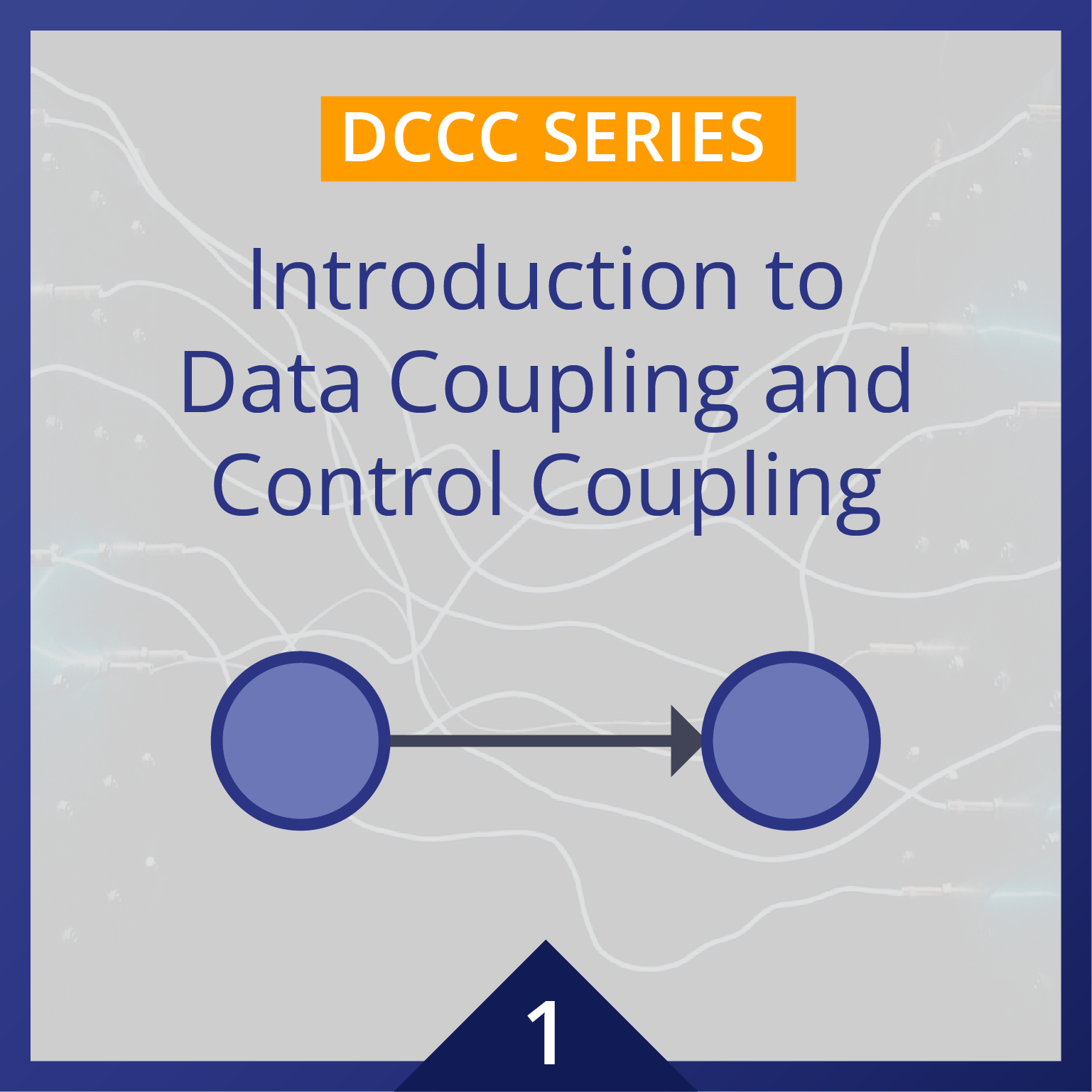
Learn the basics of Data Coupling and Control Coupling for DO-178C projects.
Generating low level tests from system tests
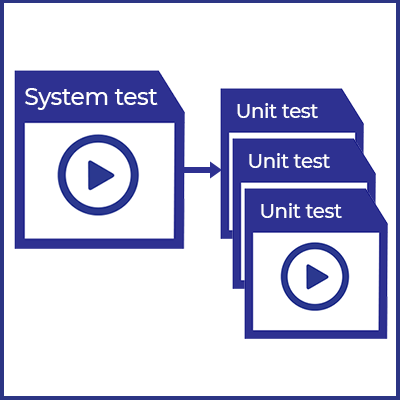
Learn about the development of RVS technology that automatically generates unit tests from your system tests.
What really happened to the software on the Mars Pathfinder spacecraft?
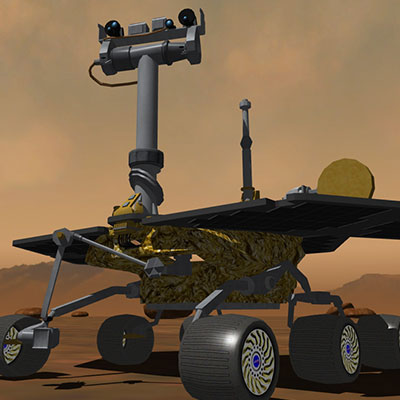
It’s the 4th of July. Exactly sixteen years ago today the Mars Pathfinder landed to a media fanfare and began to transmit data back to Earth. Days later and the flow of information and images was interrupted by a series of total systems resets. How this problem was a) diagnosed and b) resolved still makes for a fascinating tale for software engineers.
What are “co-operative” and “pre-emptive” scheduling algorithms?
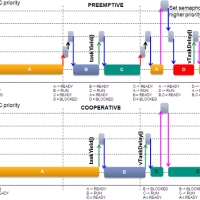
Because of their complexity, most modern systems are reliant on scheduling algorithms for efficient multitasking and multiplexing. Invariably these algorithms implement compromises based on specific objectives such as meeting deadlines. This blog post looks at two tasking models which implement different compromises depending on the objectives set by the system user: these models are called “co-operative” and “pre-emptive”.
Does DO-178C require object code structural coverage?
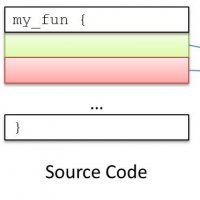
If you are developing software to Level A for DO-178B/C, your code has to undergo extremely rigorous structural coverage analysis for the purposes of certification. This includes examining both source and object code.
It’s a bad idea to hide problems from customers – so we don’t

What’s the one thing you’ll almost never hear in your meeting with a software sales representative? An admission that the software you may be thinking of buying has bugs in it.
1000 conditions per decision ought to be enough for anybody
RVS versions before 3.8 support up to 30 conditions per decision by default (up to 60 on a 64 bit target), and now versions from 3.8 support up to 1000!
Out of the box RVS integration for DDC-I's Deos RTOS

Our RVS integration with the Deos RTOS promises to offer an out-of-the-box solution, significantly reducing the effort needed to analyze timing and scheduling behavior of software hosted on Deos.